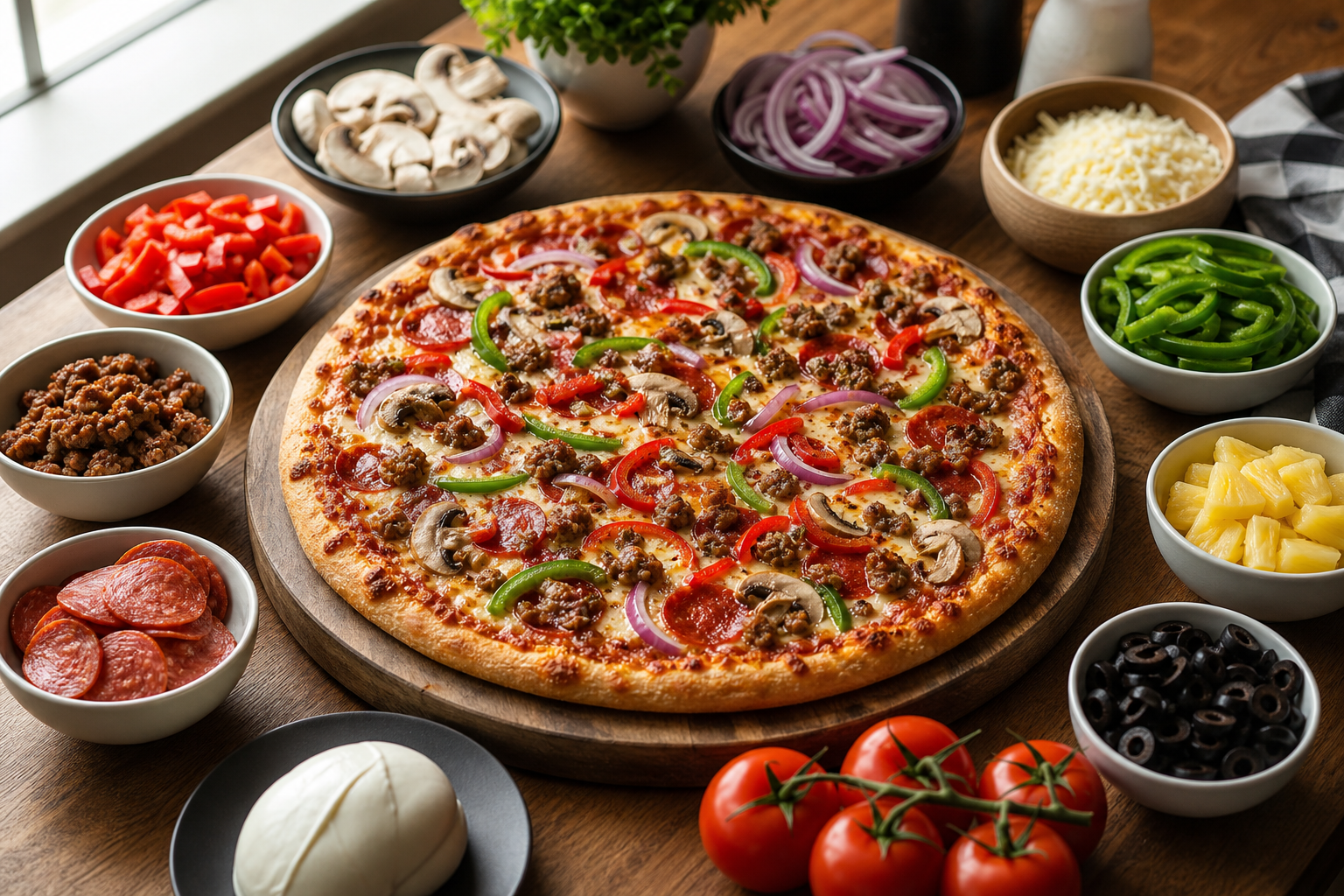
For a better custom pizza at home, control four things before you add toppings: dough thickness, moisture, weight, and heat. A 30 cm pizza usually needs about 60 to 90 ml of sauce, 100 to 150 g of cheese, and a restrained layer of toppings. That balance helps the centre cook before the crust or toppings burn. Related reading: How to Choose Pizza Topping Combinations That Work Together.
This guide focuses on the practical parts that decide the result: choosing a home-baking method, preparing toppings, assembling in the right order, and fixing the problems you can see after baking.
Choose a Dough Style That Fits Your Kitchen
Your dough choice should match the texture you want and the equipment you have. Thin dough cooks quickly and suits lighter toppings, while thicker dough needs more time and benefits from a pan that supports the centre.
| Dough style | Typical thickness before baking | Best use |
|---|---|---|
| Thin crust | About 2 to 3 mm in the centre | Crisp pizza with a light topping load |
| Traditional crust | About 4 to 6 mm in the centre | A flexible everyday pizza |
| Pan pizza | About 10 to 20 mm after rising in the pan | A thicker, softer base with a browned underside |
For a standard 30 cm pizza, a dough ball weighing roughly 250 to 300 g is a useful starting point for a medium-thickness base. Use less dough for a thin crust and more for a deep pan style. Let refrigerated dough sit at room temperature for 30 to 60 minutes before stretching so it relaxes instead of springing back. Related reading: Best Pizza in Woodstock, ON | Noni's Pizza & Wings | Noni's Pizza & Wings.
Use the Five-Part Build Formula
Build the pizza in five decisions: crust, sauce, cheese, main topping, and finishing contrast. This keeps the flavour clear and prevents the common mistake of adding every ingredient that sounds good separately.
1. Match the crust to the topping load
Thin crust works with a light layer of sauce, cheese, and two or three toppings. Traditional dough gives you more flexibility. A pan-style base can carry heavier toppings, but it needs a longer bake so the middle does not remain soft.
2. Use a measured layer of sauce
For a 30 cm pizza, start with 60 ml of sauce and add up to 90 ml if the dough is thicker. Spread it in a thin circle, leaving 1 to 2 cm uncovered around the edge. The sauce should colour the dough without forming puddles.
Marinara suits classic meat, vegetable, and cheese combinations. Barbecue works with chicken, bacon, onion, and peppers. Creamy sauces and pesto are concentrated, so use a lighter layer and reduce other rich ingredients.
3. Treat cheese as a binder, not a blanket
About 100 to 150 g of grated cheese is a practical range for a 30 cm pizza. Spread it evenly instead of building a thick mound in the centre. Small gaps allow steam to escape and help the crust and toppings brown.
4. Choose one main topping
Give the pizza a clear centre of attention: pepperoni, cooked chicken, paneer, mushrooms, or roasted vegetables. Add one or two supporting ingredients for contrast. A single dominant ingredient usually tastes more intentional than five competing ones.
5. Add a finishing contrast
Fresh herbs, sliced hot peppers, olives, greens, or a small drizzle can lift a rich pizza. Add delicate ingredients after baking when heat would wilt, burn, or dry them out.
Control Moisture, Weight, and Topping Quantity

Soggy pizza usually has too much moisture, too much weight, or both. The centre is the vulnerable area, so use less sauce and fewer toppings there than your instincts may suggest.
- Start with three to five substantial toppings, including the main protein or vegetable.
- Use one or two high-moisture ingredients, such as fresh tomatoes, mushrooms, pineapple, or olives.
- Drain wet vegetables and pat them dry. Slice mushrooms thinly so they release moisture quickly.
- Cook raw meat separately when the pizza bake will not reliably cook it through. Remove excess grease before adding it.
- Use a lighter topping layer on thin crust than on a thick or pan-style base.
- Cut ingredients into similar, bite-sized pieces so they cook at a similar rate.
- Spread toppings from the centre toward the edge instead of creating one heavy pile.
How much is too much?
For a 30 cm pizza, keep the total topping layer close to one even layer. As a rough guide, 60 to 90 g of cooked meat or 100 to 150 g of prepared vegetables is enough to add flavour without burying the dough. If you use several fatty meats, reduce the cheese and vegetables.
Moisture matters as much as quantity. Four dry, thinly sliced toppings can bake better than two wet ingredients piled together.
Choose the Baking Method That Fits Your Equipment
You do not need a specialist pizza oven to make a good custom pizza. A fully preheated home oven and a prepared baking surface are enough to begin.
| Method | Temperature and timing | Best for | Trade-off |
|---|---|---|---|
| Baking sheet | 230 to 245°C for about 12 to 18 minutes | Beginners and easy cleanup | The bottom is usually less crisp. |
| Preheated metal pan | 230 to 245°C for about 10 to 16 minutes | A firmer underside | Hot metal requires careful handling. |
| Cast-iron pan | 220 to 240°C for about 15 to 25 minutes | Pan pizza with a substantial edge | The thicker base needs more time. |
| Pizza stone | 245 to 260°C for about 7 to 12 minutes | A crisper base | It needs a long preheat and careful transfer. |
| Pizza steel | 245 to 260°C for about 5 to 10 minutes | Strong bottom heat and browning | It is heavy and can brown the base quickly. |
Preheat a stone or steel for at least 45 minutes. A baking sheet or pan generally needs 20 to 30 minutes to heat well. The exact time depends on dough thickness, topping load, oven calibration, and the starting temperature of the ingredients, so use the underside and centre as your final checks. Source: Calories on menus: information for businesses | ontario.ca.
For most beginners, a preheated baking sheet or metal pan is the simplest starting point. A stone or steel becomes worthwhile when you regularly want a crisper bottom and are comfortable transferring the dough.
Prepare Toppings Before the Dough
Prepare every topping before you stretch the dough. Once sauce touches the base, the pizza should go into the oven promptly so the dough does not absorb unnecessary moisture.
- Grate cheese and divide it into a portion for the base and a light finishing layer.
- Cook and drain sausage, bacon, or other raw meat before assembly.
- Roast or sauté dense vegetables if you want them soft and browned.
- Pat fresh tomatoes, mushrooms, pineapple, and olives dry.
- Use cold toppings sparingly. A large amount of refrigerated food lowers the surface temperature and extends the bake.
- Keep delicate herbs and fresh greens aside for the finish.
Assemble and Bake in the Right Order
Use this sequence for a more even bake. It keeps the dough from sitting under a wet layer and gives each ingredient enough exposure to heat.
- Preheat the oven and cooking surface. Give the oven and pan, stone, or steel enough time to heat fully.
- Stretch the dough evenly. Leave a slightly thicker 1 to 2 cm rim and avoid making the centre paper-thin.
- Add the sauce. Spread 60 to 90 ml across the base without flooding the centre.
- Add most of the cheese. Cover the surface lightly and evenly.
- Add cooked protein and firm vegetables. Distribute them in one layer.
- Add delicate or quick-cooking toppings. Keep them light and place some beneath the cheese if they burn easily.
- Bake until the base is browned and the centre is set. Check the underside, not only the colour of the cheese.
- Finish after baking. Add herbs, greens, fresh peppers, or a light drizzle once the pizza comes out.
Raw meat must be cooked thoroughly before serving because undercooked protein creates a food-safety risk. Cook it separately before assembly when you cannot confidently verify that the pizza bake will cook it through.
Fix the Problem You Can See
| Problem | Likely cause | Correction |
|---|---|---|
| Pale or soft crust | Insufficient preheating or excess moisture | Preheat longer, reduce wet toppings, or use a heavier cooking surface. |
| Raw centre | Overloaded middle, thick dough, or underbaking | Reduce sauce and cheese, stretch the centre more evenly, and bake until the underside is browned. |
| Burnt toppings | Delicate ingredients exposed to intense top heat | Use smaller pieces, place them beneath light cheese, add them later, or lower the rack. |
| Dough sticking | Wet surface, excess sauce, or slow assembly | Prepare the surface before stretching and move the topped dough into the oven promptly. |
| Excess grease | Several fatty toppings or undrained meat | Choose one rich protein, cook and drain it, and reduce extra cheese. |
| Uneven browning | Hot spots or uneven topping distribution | Spread ingredients evenly and rotate the pizza once if your oven has clear hot spots. |
| Toppings slide off | Too much sauce, cheese, or large pieces | Use less sauce, cut toppings smaller, and keep the cheese layer even. |
Plan a Pizza Night Without the Rush
For one pizza, portion the toppings first, preheat the oven, stretch the dough, assemble, bake, and rest the pizza for about 2 to 3 minutes before slicing. That short rest makes cutting cleaner and gives the cheese time to settle.
For a family or group, decide the flavour directions before anyone starts assembling. Keep vegetarian toppings separate from meat toppings and build lighter pizzas separately from heavier ones. A simple prep order is dough first, then cooked meat, vegetables, cheese, sauce, and finishing ingredients.
If several pizzas need to be served together, stagger assembly instead of building them all far in advance. Bake the thickest pizza first if it needs the longest time, then serve thinner pizzas promptly because they lose crispness faster.
For leftovers, cool the pizza promptly, refrigerate it in a covered container, and reheat only what you plan to eat. A dry, hot pan or oven generally restores more texture than prolonged microwave heating.
Decide Between Cooking at Home and Ordering Custom

Home preparation suits experimentation, ingredient control, and turning the meal into an activity. It also requires dough preparation, oven space, cleanup, and some trial and error.
Ordering suits you when the priority is a freshly prepared custom pizza without mixing dough or learning the behaviour of your oven. It is also practical when a group wants different combinations and you do not want to assemble several pies yourself.
| If your priority is... | The more suitable approach is... |
|---|---|
| Learning and experimenting | Make pizza at home. |
| Full ingredient control | Make pizza at home. |
| Less preparation and cleanup | Order a customized pizza. |
| Different preferences in one group | Order separate custom pizzas or plan distinct homemade pies. |
| A crust your equipment cannot produce well | Order a suitable option or use a simpler home method. |
In Woodstock, Noni’s Pizza & Wings offers freshly prepared pizza for pickup or delivery. You can review the current Create Your Own Pizza menu before choosing whether ordering fits your evening, then use the online ordering page for the available customization flow.
Custom Pizza Questions Worth Asking
How many toppings should I put on a homemade pizza?
Start with three to five substantial toppings. Use fewer on thin crust and reduce the total when ingredients are wet, fatty, or heavy.
What is the best sauce for a custom pizza?
There is no single best sauce. Choose marinara for classic flavours, barbecue for chicken, a creamy sauce for richness, pesto for herbs, or a spicy base for a hotter direction.
How do I stop homemade pizza from becoming soggy?
Use light sauce, drain wet vegetables, cook and drain meat, avoid several moist toppings together, and preheat the cooking surface. Reducing the load is often more effective than extending the bake.
Is a pizza stone or steel necessary for beginners?
No. A preheated baking sheet or pan is a sensible starting point. A stone or steel can improve bottom heat, but it is not required for a well-baked pizza.
Choose the Approach That Fits Tonight
Use the formula at home when you want to experiment with dough, heat, and toppings. If you want freshly prepared customization without home preparation, order pizza online from Noni’s Pizza & Wings for pickup or local Woodstock delivery.
Topics & Tags: