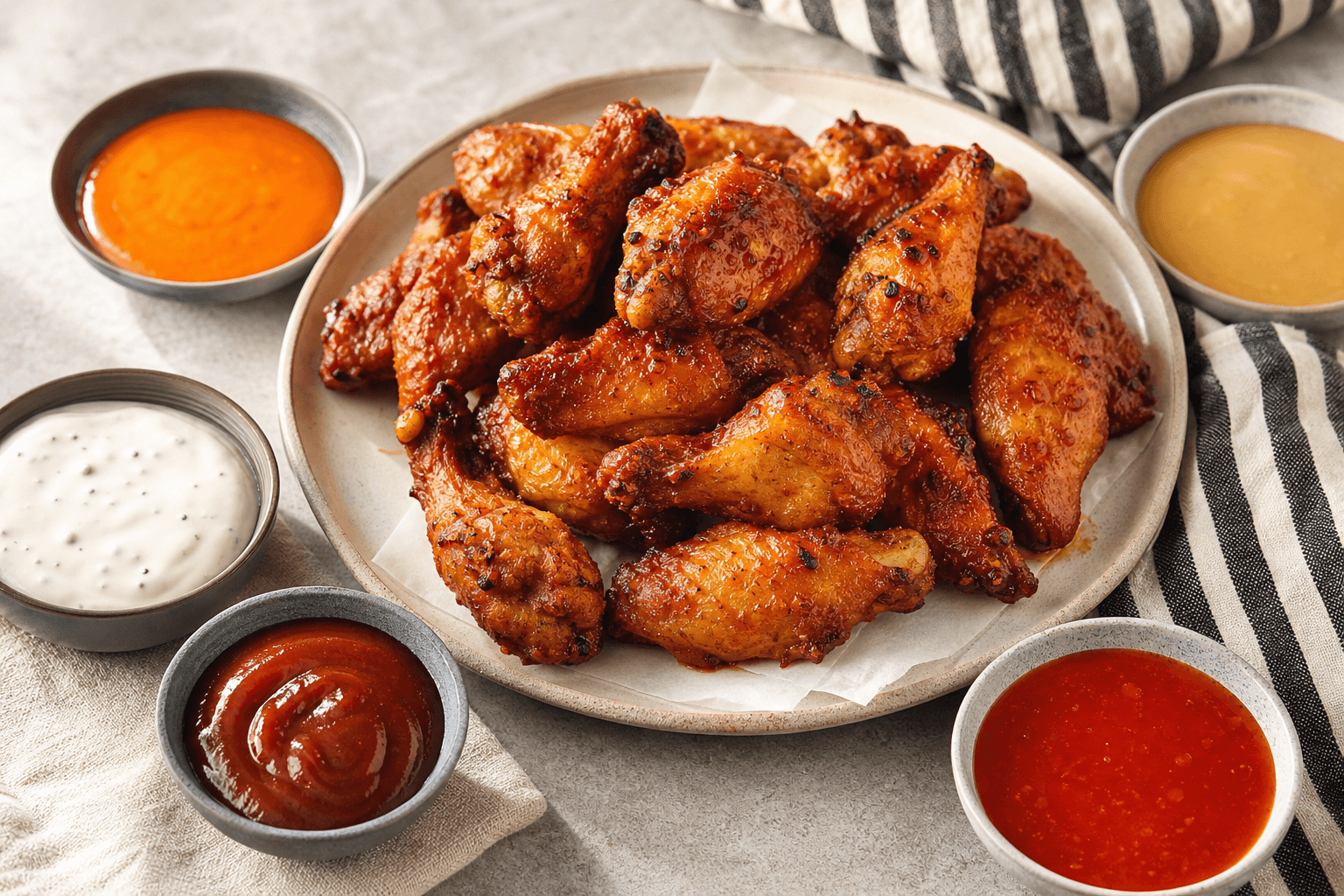
For baked wings, bake them until crisp before adding most wet sauces. Toss wings with sauce after baking, or glaze them briefly at the end, because prolonged exposure to sugary or wet sauces can burn the coating or soften the skin. Noni's Pizza & Wings offers baked, breaded, and boneless wings in 1 to 4 pounds with nine sauce choices.
This guide explains how to choose a flavour, apply it without losing texture, prepare several sauces from one batch, and handle leftovers.
Choose a Sauce by Flavour, Heat, and Texture

Start with the flavour direction, then decide how much heat and stickiness you want. Sugary sauces need a shorter finishing stage, while thin, tangy sauces usually work best after the wings finish baking.
| Flavour direction | Heat | Sweetness and texture | Best finishing approach |
|---|---|---|---|
| Mild or classic | Low | Light, savoury or tangy coating | Toss after baking |
| Buffalo-style | Medium to hot | Thin, tangy and buttery | Toss immediately after baking |
| Barbecue | Low to medium | Smoky, thick and often sweet | Toss after baking or finish briefly |
| Honey garlic | Low | Sweet, savoury and glossy | Toss after baking |
| Sweet Thai or sweet heat | Low to medium | Sticky and glossy | Apply at the end |
| Blue cheese or creamy | Low | Creamy and heavier | Serve as a dip |
| Very hot | Hot to extreme | Thin, sharp and intense | Toss after baking gradually |
Noni's lists Mild, Medium & Hot, Honey Garlic, BBQ, Sweet Thai, Buffalo, Suicide, Fire & Ice, and Blue Cheese. These nine sauces are available with baked, breaded, and boneless wings. You can compare the baked wings sauce list alongside the listed sizes and prices.
Simple home formulas
For buffalo-style sauce, start with two parts hot sauce and one part melted butter. Add more butter for a milder coating or more hot sauce for sharper heat. Toss it with fully baked wings while the sauce is warm.
For a barbecue finish, use bottled barbecue sauce or thin it with a splash of water or vinegar. For honey garlic, combine honey, melted butter, minced garlic, and a small splash of vinegar or lemon juice. A brief warm-up is enough.
Make a sweet sauce less sugary with vinegar, lemon juice, or hot sauce. Make a hot sauce milder with butter, honey, barbecue sauce, or a creamy dip. Add heat gradually because an overspiced coating is difficult to correct.
When Should Sauce Go on Baked Wings?
Dry seasoning can go on before baking, most wet sauces should go on after baking, and sugary glazes belong in a short final stage. This timing protects the skin from moisture and keeps sugar from darkening too quickly.
- Dry seasoning: Pat the wings dry, season lightly, and bake.
- Buffalo or thin hot sauce: Bake first, then toss while the wings are hot.
- Barbecue, honey garlic, or sweet Thai glaze: Bake nearly to completion, brush on a thin layer, then return the wings briefly to set the coating.
- Creamy or blue-cheese sauce: Use it as a dip or add it after baking.
Early wet sauce can steam the surface and soften the skin. A thick sugary coating left in a hot oven can darken before the wings are ready, so glaze near the end.
A Reliable Base Method for Oven-Baked Wings

This home method creates a plain, crisp base that can accept several sauces. It is a cooking framework for home preparation, not a description of Noni's restaurant process.
What you need
- Chicken wings
- Paper towels
- A rimmed baking sheet and wire rack
- Salt and a light dry seasoning blend
- A wide bowl
- Your chosen sauce
Method
- Dry the wings thoroughly. Pat the surface with paper towels. Surface moisture slows browning.
- Season lightly. Use enough seasoning to flavour the meat without competing with the sauce.
- Create airflow. Set the wings on a wire rack, leaving space between pieces. Crowding traps steam.
- Bake until browned and fully cooked. For a typical home batch, use a 425°F (220°C) oven for about 40 to 50 minutes, turning the wings halfway through. Timing varies with wing size and oven performance, so check the thickest piece with a food thermometer and use 165°F (74°C) as the doneness point.
- Divide before saucing. Move portions into separate bowls if you are using different flavours. One standard rimmed sheet works well for roughly 2 to 3 pounds when the wings are spaced in a single layer. Use another sheet for a larger batch.
- Toss or glaze. Add a modest amount of sauce and add more only if needed. Return sticky glazed wings briefly to the oven if you want the coating to set.
- Serve promptly. Sauce softens the surface as it sits, especially when wings are piled together.
A wide bowl lets each wing roll through the sauce without requiring a large amount of liquid. Start with less sauce than you think you need.
Keep the Coating Crisp After Saucing
The crispest result comes from a dry, well-spaced bake followed by a quick toss and immediate serving. More sauce and longer time in a covered container mean a softer coating.
- Soggy wings: Drain excess sauce, spread the pieces out, and serve uncovered.
- Burnt glaze: Apply a thinner layer near the end and shorten the finishing time.
- Patchy coating: Toss in a wide bowl and add sauce in two small additions.
- Overly hot wings: Mix hot sauce with butter, honey, or a mild sauce before coating.
- Soft breading: Keep breaded wings separate from wet sauces until serving, or serve sauce on the side.
A short final crisping stage can help thin barbecue or honey glazes. Watch closely. Creamy sauces are better served as dips.
Make Several Sauce Flavours From One Batch
Prepare one plain batch, then divide the cooked wings before sauce touches them. Label each bowl so mild and hot portions do not get mixed.
For a hypothetical party batch, create four portions:
- Mild: Use a light buttery or mild sauce.
- Sweet: Use honey garlic or a sweet Thai-style glaze just before serving.
- Smoky: Use barbecue sauce and finish it briefly.
- Hot: Use buffalo or a hotter sauce, starting with a thin coating.
This works well beside pizza because guests can choose contrasting flavours. Keep extra sauce in labelled cups instead of making every piece equally intense.
Noni's offers Indian-fusion pizzas with butter, tandoori, and spicy bases, including vegetarian paneer choices. That gives a group a way to pair classic wing sauces with a more boldly seasoned pizza.
For ideas about the drink side of a pizza-and-wings meal, this pizza and beer pairing guide discusses contrast, richness, and heat.
Storage and Reheating for Sauced Wings
For texture, sauced wings are best treated as short-term leftovers because wet coatings soften during storage. Use the storage time recommended by your local food-safety authority for cooked poultry.
To restore some texture, reheat wings uncovered on a rack or in an air-fryer-style basket at about 350°F (175°C) for 10 to 15 minutes, turning once. Add a small fresh coating of sauce afterwards if the original glaze has become dull or sticky.
Microwaving is convenient but tends to soften the coating. If you use it, heat in short intervals, then finish uncovered in a hot pan, oven, or air fryer when possible.
For a local comparison of ready-to-eat restaurant wings and frozen wings prepared at home, see restaurant versus frozen chicken wings.
If You Prefer to Order the Wings
If you want the sauce decision without preparing a batch, ordering ready-to-eat wings removes the drying, baking, dividing, and glazing steps. Choose a sauce that suits the rest of the meal, and request sauce on the side when preserving crunch during transport matters most.
Noni's offers nine current sauce choices, including Buffalo, Honey Garlic, BBQ, Sweet Thai, Blue Cheese, and hotter options. For a mixed group, split the order between contrasting sauces instead of making one large portion equally intense for everyone.
Pickup and delivery are available across Woodstock, and dine-in is available at 300 Main St, Unit 8. The practical choice is pickup when you want the coating to arrive as close to the kitchen finish as possible, delivery when convenience matters more, and dine-in when you plan to eat immediately.
Choose Your Finish and Your Wing Style
Should buffalo sauce go on baked wings before or after baking?
Add buffalo sauce after the wings have baked and crisped. Toss the hot wings in a thin coating immediately after they leave the oven, then serve promptly.
How do you make a sticky wing sauce without burning it?
Apply a thin layer near the end and use only a short finishing stage. Honey, sugar, and thick barbecue sauces can darken quickly.
How long do sauced baked wings last in the fridge?
For best texture, treat sauced wings as short-term leftovers because the coating softens in the refrigerator. Use the storage time recommended by your local food-safety authority for cooked poultry.
Can you reheat sauced baked wings and keep them crisp?
Yes, although they will rarely be as crisp as when fresh. Reheat uncovered on a rack or in an air-fryer-style basket, avoid stacking, and add fresh sauce afterwards if needed.
The simplest rule is: bake dry, sauce late, glaze briefly, and serve without stacking. If you would rather order, Noni's Pizza & Wings offers baked chicken wings in Woodstock in classic, breaded, and boneless formats.
Topics & Tags: